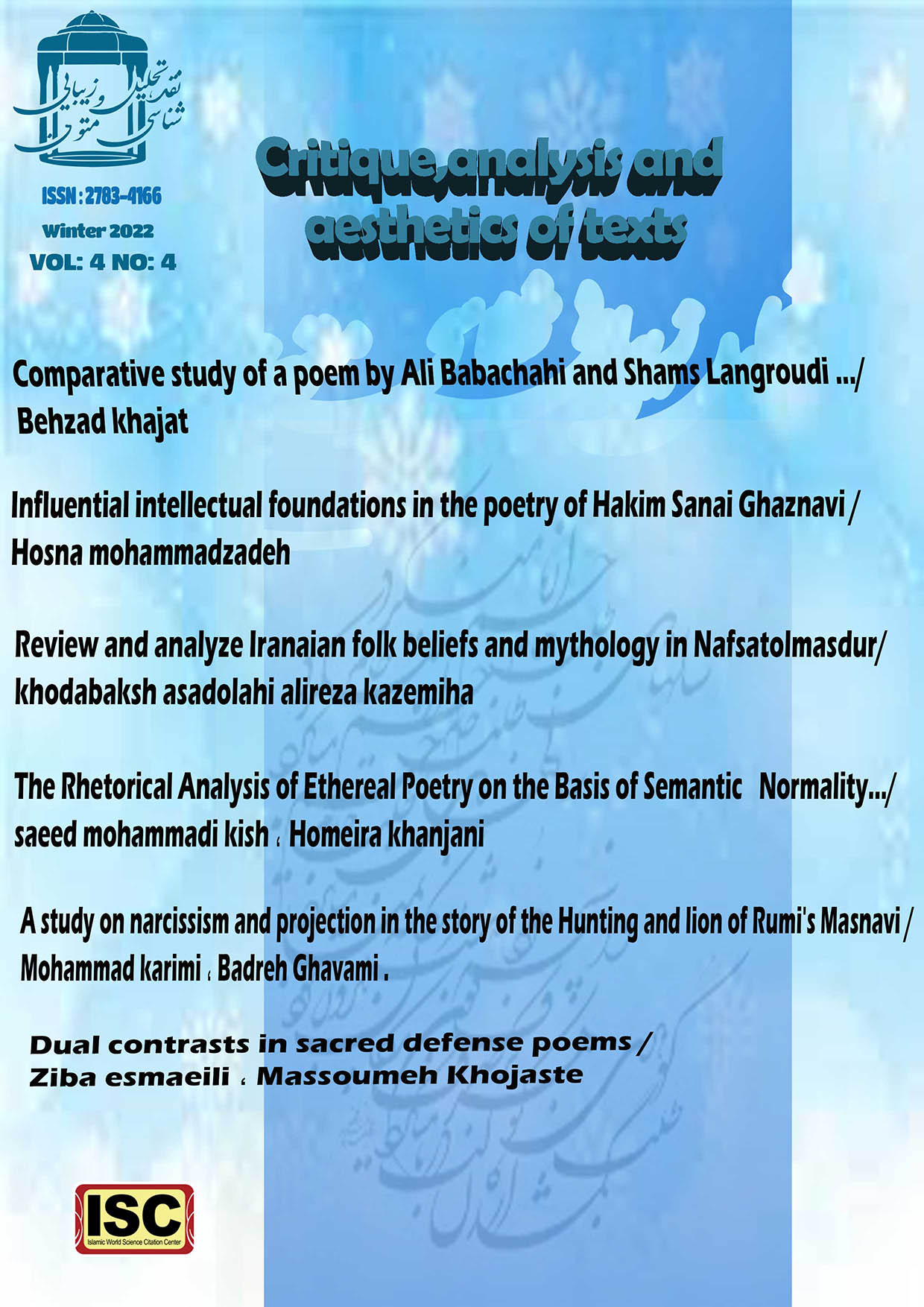
The Rhetorical Analysis of Ethereal Poetry on the Basis of Semantic Normality Relying on the Office of "siyah mashg"

10.52547/qap.24308.4.4.74

Document Type : Original Article

Authors

1 PhD candidate of Persian Language and Literature, Dehaghan Branch, Islamic Azad University. Dehaghan, Iran

2 Education teacher. Dehaghan, Iran.//Email: homeira1222@gmail.com

Abstract
The aim of this study is to investigate different types of semantic normality such as simile,  metaphor, falsehood, permissible, anecdotal, contradiction, paradoxes in one hundred sonnets of Hooshang Ebtehaj. The ability to communicate and express words is one of the possibilities that mankind has used to the highest level of history in speech and writing. Among which the  arrangement of speech has always been the subject of speaker attentions. Therefore, there is a  sense of purity and adornment of the speech in all the elder works. Normality is one way to  understand and criticize literary issues in various aspects of the beautification of the art work in Russian Formalism School. Two ways of assimilation and succession help in the semantic normality of the poet based on the semantic rules governing the Norwegian language. Considering that the domain of meaning or semantic is more than the other levels of language in the highlighting, each poet who succeeding in terms of his talent and knowledge in this field will  have more pure poems. The poet or writer is looking for a more beautiful expression while  expressing the subject.In Persian linguistic studies and literary researches, the attitude of formalists has found a special place. This study examines the semantic abnormality and analyzes how to use the elements of semantic abnormality in Houshang Ebtehaj's poetry in different types of semantic abnormalities such as simile, metaphor, irony, metaphor, ambiguity, contradiction, paradox in one hundred of Houshang Ebtehaj's sonnets.

Keywords

Subjects
ابتهاج، هوشنگ (1378) سیاه مشق.تهران: نشرکارنامه.
احمدی، بابک ( 1374) ‌حقیقت و زیبایی. چاپ هفتم. تهران: نشر مرکز.
احمدی، بابک (1380) ساختار و تأویل متن، چاپ هفتم، تهران: نشر مرکز.
پهلوان نژاد محمدرضا، طاهری بیرگانی نسرین (1390) «بررسی هنجارگریزی در شعر شفیعی کدکنی بر مبنای الگوی لیچ»، زبان شناسی تطبیقی، دانشگاه بوعلی سینا، پاییز و زمستان 1390، دوره یک، شماره دوم.
پیروز، غلامرضا، حسن پورآلادشتی، حسین، اسماعیلی، مراد(1391) «بررسی انواع هنجار گریزی در اشعار هوشنگ ایرانی» شعر پژوهی بوستان ادب - علوم اجتماعی و انسانی  دانشگاه شیراز، زمستان 1391، دوره 4، شمارة  چهارم.
تادیه، ژان ایو ( 1377) نقد ادبی در سده ی بیستم؛ ترجمه ی محمد رحیم احمدی، تهران: سوره.
خویشتن دار پریسا، محمدی محمد حسین (1392) «هنجارگریزی معنایی در شعر قیصر امین پور»، نشریة زیبایی شناسی ادبی، زمستان 1392 ، دوره چهارم، شماره هجدهم.
شفیعی‌کدکنی، محمد‌رضا (1373) موسیقی شعر. چاپ سوم تهران: آگاه.
شفیعی‌کدکنی، محمد‌رضا  (1391) رستاخیز‌ کلمات (درس‌ گفتارهایی دربارة نظریة ادبی صورتگرایان روس). تهران: سخن.
شفیعی‌کدکنی، محمد‌رضا   (1393) صورخیال در شعر فارسی. چاپ هفدهم ویراست دوم، تهران: آگه.
شمیسا، سیروس (1394) بیان. چاپ چهارم از ویراست چهارم، تهران: نشر میترا .
شمیسا، سیروس ( 1395) نگاهی تازه به بدیع.تهران: میترا.
صفوی، کوروش (1373) از زبان­شناسی به ادبیات (نظم). تهران: چشمه .
طغیانی اسحاق، صادقیان سمیه(1390)«هنجارشکنی در مجموع شعر از این اوستا»، نشریة ادبیات پارسی معاصر، بهار و تابستان 1390، دوره یکم، شماره یکم.
علوی مقدم، مهیار (1377) نظریه‌های نقد ادبی معاصر ‌(صورت‌گرایی ‌و ساختارگرایی). تهران: سمت .
فتوحی رود معجنی، محمود( 1388) بلاغت تصویر. تهران: سخن.
کزازی، میرجلال‌الدین (1389)  بیان1 ــ زیباشناسی سخن پارسی. تهران: مرکز .
مختاری, مسروره؛ پورالخاص شکرالله، نیرومند حسین(1394) «اشکال هنجارگریزی معنایی در دیوان حسین منزوی»، همایش بین المللی جستارهای ادبی، زبان و ارتباطات فرهنگی.
همایی، جلال‌الدین (1386) فنون بلاغت و صناعات ادبی. تهران: نشر هما.
  • Receive Date 05 May 2021
  • Revise Date 28 June 2021
  • Accept Date 25 August 2021